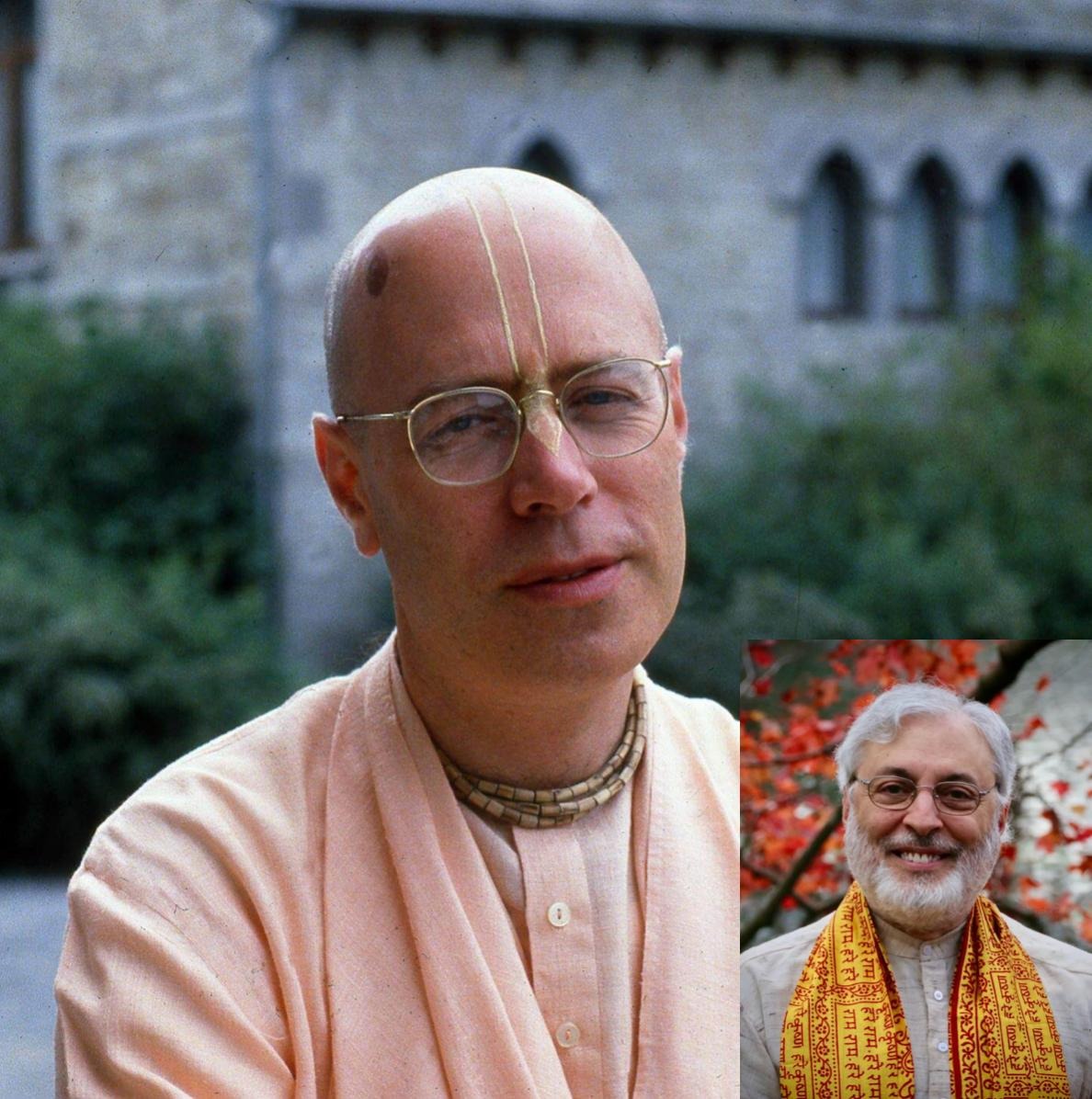

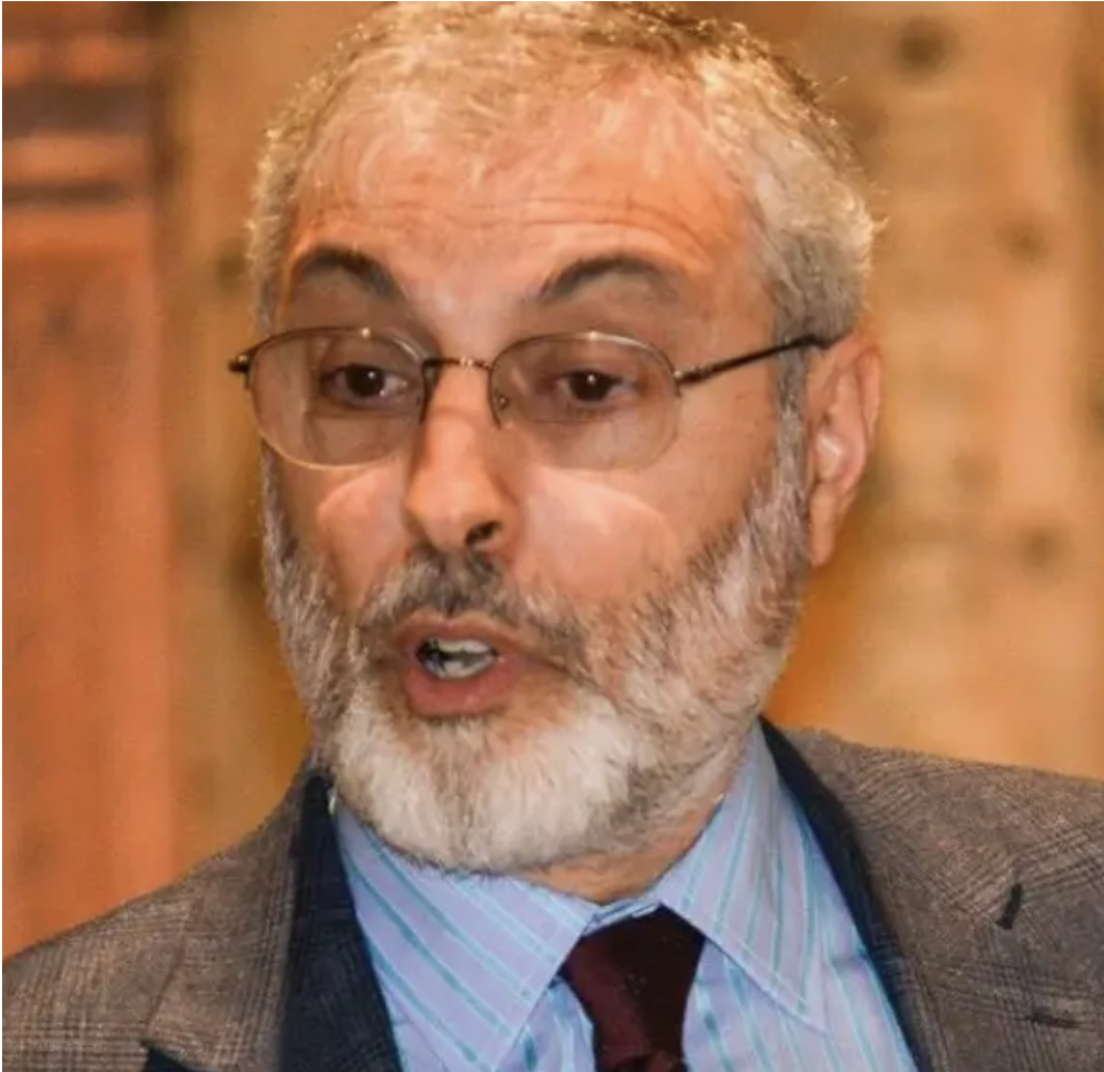
Graham sat across from the editor in the BBT offices in Los Angeles. The editor, Dravida, had just explained why he changed a passage about the soul and the marginal potency: it didn’t make sense to him.
Graham asked a question that would alter the course of his next seven years: “Are we supposed to be reading Prabhupada’s books according to what you can think of or what you can’t think of?”
The question was devastating. The editor’s jaw dropped.
What Graham didn’t notice — perhaps couldn’t notice — was that the same question would eventually apply to him.
The Scholar Who Walked In
Dr. Graham M. Schweig is not a typical figure in the Hare Krishna world. Two master’s degrees and a PhD from Harvard. Distinguished research faculty at the Graduate Theological Union at Berkeley. Published with Oxford University Press, Princeton, Yale, Columbia, and Harper Collins. A professor of religion and philosophy at Christopher Newport University.
When devotees in Los Angeles asked him in 2017 whether the editorial changes to Prabhupada’s books were appropriate, he initially trusted the editors. Most people did. The changes had been presented as corrections — routine, necessary, respectful.
Then he looked at the actual data.
Nearly 5,000 changes to the Bhagavad Gita. Seventy-seven percent of the verses altered. Entire sentences deleted from purports. Theological meanings reversed. A passage identifying Rama as Ramachandra removed from Chapter 10, despite Prabhupada himself quoting that exact passage on a morning walk to confirm Rama is mentioned in the Gita. When this was pointed out to the lead editor, Jayadvaita Swami, his response was simple: “Well, I don’t agree.”
The evidence Schweig compiled over seven years is genuinely alarming. His four-point summary of the problem — false assumption of authority, editorial overreach, non-compliance with scholarly standards, and changes without transparency — is well-documented and difficult to dismiss. His citation of Prabhupada’s final instructions is precise: “Our books must remain as they are. Do not waste your time anymore with such attempts” (March 31, 1977).
On the question of whether the BBT had the right to change Prabhupada’s books after his departure, Schweig is persuasive.
The difficulty begins when he presents his solution.
The Frame and the Painting
Schweig proposes an annotated edition of the original 1972 Bhagavad Gita As It Is. Not a single word of Prabhupada’s text would be changed. Instead, forty-five endnotes would be added, marked by small superscript numbers in the text, offering scholarly context, identifying sources Prabhupada cited from memory, and occasionally noting where a passage might reflect a transcription issue rather than authorial intent.
He describes this as framing a painting without retouching it. The Rembrandt stays untouched. You simply add an elegant frame.
In the world of academic publishing, this is standard practice. Annotated editions of Shakespeare, Dante, the King James Bible, and countless other works exist precisely because the original text is considered too valuable to alter. The notes serve the reader without displacing the author.
The analogy sounds reasonable. Many people stop here, satisfied.
But the analogy contains a question it doesn’t answer: Who asked for the frame?
The Authorization Problem
Religious traditions across centuries have faced the same dilemma: what to do with a sacred text after the author dies.
When Martin Luther translated the Bible into German, he made editorial choices that shaped Protestant theology for centuries — translating allein durch den Glauben (“by faith alone”) into Romans 3:28, adding a word that doesn’t appear in the Greek. He wasn’t trying to corrupt scripture. He was trying to make it accessible. But the word “alone” changed the meaning in ways still debated five hundred years later.
When Islamic scholars developed the science of hadith classification after Muhammad’s death, they created an elaborate system of authentication chains (isnad) to preserve the Prophet’s words. But the classification system itself — who was reliable, who wasn’t, which hadith was “strong” and which “weak” — became a vehicle for theological positions the classifiers already held.
The pattern is consistent: the person doing the preserving shapes what gets preserved.
Schweig is aware of this pattern. He cites it against the BBT editors. But he doesn’t apply it to himself.
Prabhupada said “our books must remain as they are.” He didn’t say “as they are, plus forty-five endnotes.” He didn’t say “as they are, but with superscript numbers directing readers to my annotations.” He said as they are.
When Schweig quotes this instruction against the BBT, he reads it literally. When it applies to his own edition, he reads it flexibly. The text stays untouched, he argues, so the instruction is honored. But “as they are” is a phrase that either includes the physical presentation of the book or it doesn’t. You cannot claim it forbids changing words but permits adding forty-five scholarly interventions to the margins.
And the notes themselves are not neutral. Schweig acknowledges that some indicate “the author is most likely to mean this and not this.” Others note that the “limbs of yoga” appear in an unexpected order. These are interpretive judgments — decisions about what is clear and what requires clarification, what is intentional and what is accidental.
This is precisely what he criticized Dravida for doing: deciding, based on personal understanding, what Prabhupada really meant.
The Academics Who Never Asked
Perhaps the most revealing detail in Schweig’s case comes from a source he himself cites.
Tom Hopkins, a respected professor and friend of the Vaishnava tradition, told Schweig directly: “We scholars don’t expect Prabhupada to match every little conventional aspect of writing in English. We’re looking at him as an ambassador of the tradition.”
Edward Dimock endorsed the original 1972 edition without requesting annotations.
The academic community that Schweig claims to serve did not ask for an annotated edition. They endorsed the original text, with its unconventional English and its devotional directness, as a legitimate scholarly contribution.
Schweig decided the annotations were necessary. The question is: for whom?
And there’s a detail that makes this question sharper. Prabhupada himself produced an annotated version of his Gita — in the Delhi Bible Times edition. He chose what to annotate and what to leave alone. When the Macmillan edition was published, he chose not to include those annotations. He placed on the cover: “Complete Edition.”
If the author himself decided the unannotated version was complete, what does it mean when someone else decides it needs forty-five endnotes?
The Same Premise, Different Tools
Max Weber’s concept of the “routinization of charisma” describes how movements preserve a founder’s authority after the founder’s death. The process is well-documented: the charismatic leader’s words get systematized, interpreted, and mediated by successors who genuinely believe they are protecting the legacy.
The BBT editors and Graham Schweig represent two versions of this routinization.
Jayadvaita Swami’s position: The text contains errors that need correction. Therefore, change the text.
Schweig’s position: The text needs a scholarly framework to be properly understood. Therefore, add forty-five annotations.
The methods differ. The premise is identical: what Prabhupada left is not sufficient as it stands.
One uses scissors. The other uses a frame. But both begin from the same assumption — that the painting has a problem.
This is not a trivial observation. It is the fault line that runs through Schweig’s entire project. If the 1972 Bhagavad Gita As It Is is genuinely complete — as Prabhupada himself declared — then it needs neither editorial correction nor scholarly annotation. You reprint it and distribute it. Full stop.
If it is not complete — if it benefits from intervention, whether that intervention is changing words or adding endnotes — then the question is no longer whether to intervene, but who gets to intervene and how.
And that is a question about authority, not about preservation.
The Architecture of Replacement
There is a pattern in Schweig’s actions that, taken individually, looks like advocacy. Taken together, it looks like positioning.
He builds the case for illegitimacy. His book, “Posthumous Editing of a Great Master’s Work,” and his public presentations don’t merely criticize specific changes. They construct a comprehensive argument that the second edition is academically, devotionally, and legally illegitimate. If the second edition is illegitimate, the movement needs an alternative.
He organizes the verdict. The 2020 Berkeley conference on posthumous editing produced a unanimous academic consensus: you don’t change a master’s works after death. The BBT attempted to preempt this conference with a meeting in Washington DC. The consensus didn’t just delegitimize the BBT’s approach — it legitimized precisely one alternative: the annotated edition.
He accumulates endorsements the BBT cannot match. Rita Sharma, director of the Center for Dharma Studies at Berkeley, endorsed his edition. Schweig notes with emphasis that the BBT has not obtained a single academic endorsement for the revised edition. The implicit message is clear: his edition has scholarly credibility; theirs does not.
He positions himself as uniquely qualified. Sanskrit expertise. Harvard credentials. Publications with the most prestigious university presses in the English-speaking world. The message, never stated but always present: the BBT editors lack the qualifications for their intervention, but I have the qualifications for mine.
He offers himself as expert witness in the Delhi copyright case. If the legal process invalidates the BBT’s editorial authority, someone must fill the vacuum. Schweig, with his annotated edition already prepared and academically endorsed, would be positioned to do exactly that.
No single action in this sequence is illegitimate. A scholar investigating editorial practices, organizing conferences, publishing research, offering expert testimony — all of this is normal academic work.
But the cumulative effect is the construction of a pathway that leads to one destination: Schweig’s annotated edition as the authoritative text for the Hare Krishna movement.
What the Voice Says, What the Hands Do
The rhetorical strategy is elegant in its simplicity.
In his public statements, Schweig speaks the language of preservation. Don’t change anything. Respect the author. Honor arsha prayoga. He positions himself squarely with the majority of devotees who reject the BBT’s changes. Emotionally, he is on their side.
But his actions tell a different story. He produces an alternative edition. He accumulates academic endorsements for that edition. He systematically delegitimizes the existing published version. He positions himself as the only person with the credentials to do what needs to be done.
The conclusion — that his edition should replace the BBT’s — is never spoken. It doesn’t need to be. The logic of his actions leads there inevitably.
This is a pattern that recurs in institutional conflicts across traditions. Thomas Cranmer didn’t announce that he was replacing Catholic worship when he published the Book of Common Prayer. He presented it as a restoration of authentic practice — a return to the purity of the early church. The replacement happened through the language of preservation.
Joseph Smith didn’t present the Book of Mormon as a competitor to the Bible. He presented it as a restoration of lost scripture — another testament of Jesus Christ. The displacement happened through the vocabulary of completion.
Schweig doesn’t present his annotated edition as a competitor to Prabhupada’s original. He presents it as the means of preserving the original. But preservation that adds your voice to the author’s is not preservation. It is commentary with institutional ambitions.
The Deeper Question
Beneath the editorial debate lies a question that neither Schweig nor his critics have fully confronted.
If Prabhupada said that Krishna personally came and dictated what he would write — “I even read my books. Do you know why? Because every day I sit to write, Krishna personally comes, stands by me, and dictates what I’m going to write” — then the yoga limbs appearing in an unexpected order were dictated by Krishna. The passages that Schweig identifies as possible transcription issues were approved by Krishna.
The principle of arsha prayoga — which Schweig himself cites — holds that the words of the rishi are respected even when they contain apparent imperfections, because the imperfections may carry meaning the reader has not yet understood.
Schweig uses this principle to argue against the BBT’s changes. But carried to its logical conclusion, the same principle argues against his annotations. If even the apparent imperfections are meaningful, then annotating those imperfections — marking them with superscript numbers and directing the reader to scholarly explanations of why they might be “errors” — is itself a form of disrespect to the rishi’s expression.
You cannot invoke arsha prayoga to forbid changing words and then suspend it to permit flagging those same words as problematic.
The Paradox at the Heart
The deepest irony of Schweig’s project is that it mirrors, in refined academic form, the very pattern he spent seven years documenting and criticizing.
The BBT editors believed they were improving Prabhupada’s books. They were sincere. They had institutional backing. They genuinely thought their intervention was necessary and beneficial.
Schweig believes he is preserving Prabhupada’s books. He is sincere. He has academic backing. He genuinely thinks his intervention is necessary and beneficial.
But both begin from the same unspoken conviction: Prabhupada’s book, as he left it, is not enough.
The difference is one of method, not of nature. And the question that hangs over both — unanswered and perhaps unanswerable — is the one Schweig himself asked Dravida in that BBT office in Los Angeles:
“Are we supposed to be reading Prabhupada’s books according to what you can think of or what you can’t think of?”
The forty-five endnotes are Graham Schweig’s answer to that question.
They are just not the answer he thinks they are.
Based on: Eighth Element Podcast interview with Dr. Graham Schweig, Buzz Ryan, and Garallard Source: https://www.youtube.com/watch?v=XJCybAqbcf0