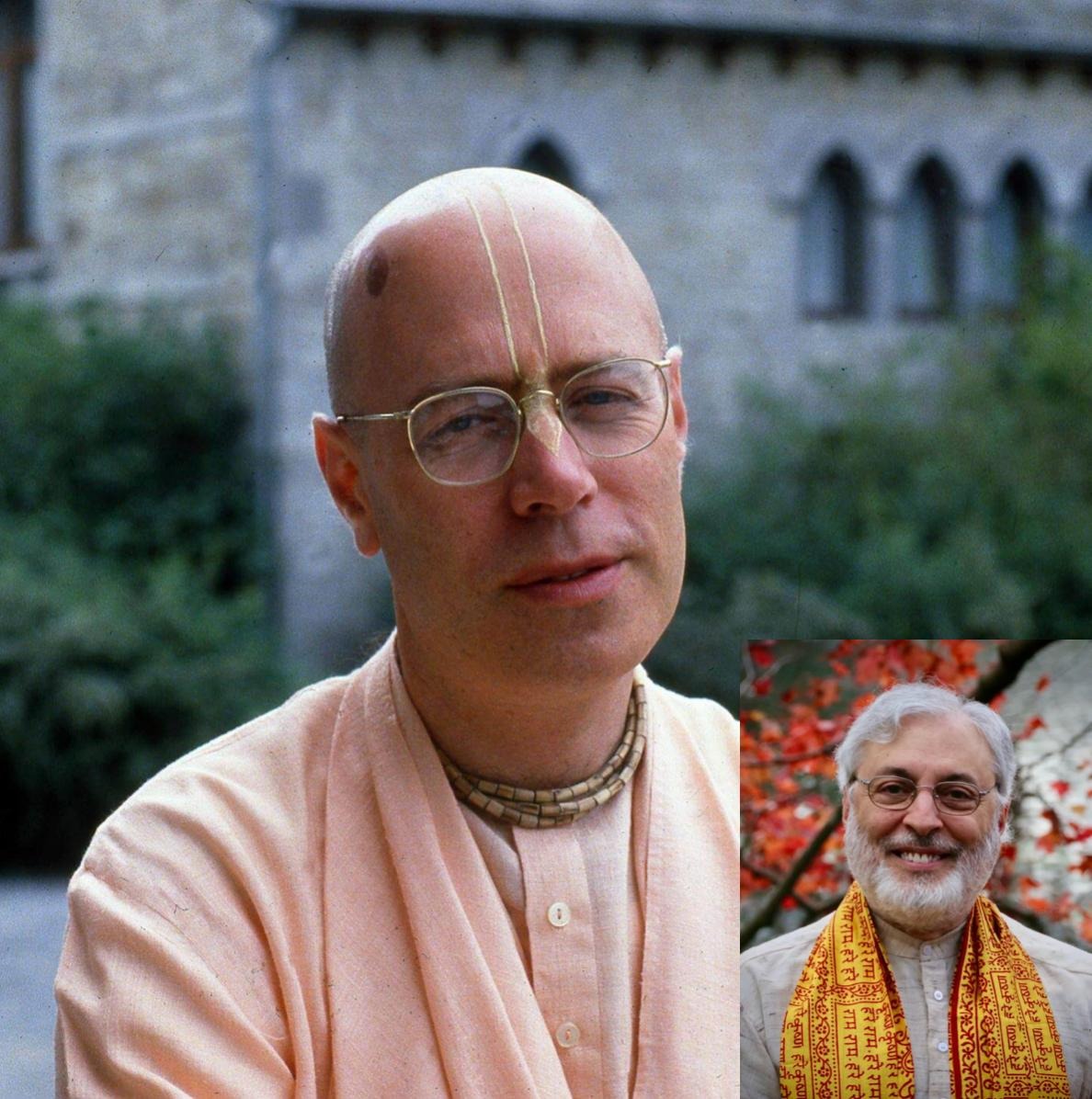


By Jagannatha Mishra Dasa
In the philosophical battlefield where every shastric term carries the weight of parampara, H.D. Goswami’s A Comprehensive Guide to Bhagavad-gītā with Literal Translation emerges, published by Krishna West Inc. At first glance, it poses as scholarly companion to Srila Prabhupada’s pristine torch—his Bhagavad-gītā As It Is (Macmillan 1972). Both proclaim Krishna as svayam bhagavān, acintya-bhedabheda, and bhakti as supreme yoga.
But beneath the academic polish lurks a clear agenda: Krishna West. Goswami doesn’t pen a neutral commentary. He pushes an ideology that dresses Krishna consciousness in Western suits, turns saṅkīrtan into office philosophy, and whispers to the secular Westerner that his career is his bhakti sadhana. This isn’t innocent cultural adaptation. It’s systematic deviation swapping Mahaprabhu’s saffron fire for executive yoga.
The main crime hits in PART VIII, where Goswami commits central heresy: “Karma-yoga allows us to continue all our normal, decent activities… Career as Yoga.” Taxes become yajña. Family paychecks get spiritualized. He cites Janaka [3.20] to “prove” worldly kings attain perfection without ditching the palace.
Prabhupada would shred this caricature. His purport [3.35] warns grihasthas live with family “but don’t forget Krishna consciousness”—saṅkīrtan, Deity, varnashrama ashram. Worldly career binds via karma-phala [2.47]. Goswami claims to free it with mere mental intention. The office worker thinks his Excel is spiritualized. The grhamedhi feels like a sannyasi. Nishkama-karma gets flipped: full-time service becomes “optional.”
The mutilation rolls on in PART VII. Sannyāsa gets redefined as “entrusting actions to God” [6.2], doable without “seclusion or celibacy” [6.10-14]. Yoga triumphs through samatvam amid daily dualities. No imposing babhru-varya required. Prabhupada teaches sannyasa is mahabhagavata purity [18.62]. Tilak and mala enforce real vairagya. Goswami makes them optional accessories. Pure Krishna West: “Come as you are, stay as you are, just change your mind.”
Samatvam suffers the same fate. In PART VII it twists into “race, gender, species” equality [6.29-32]. Modern analogies like martial law for adharma [PART I] strip the Mahabharata epic of its Vedic tang. Prabhupada kept varna by guna-karma [4.13]: spiritual equality, not social erasure. Goswami blurs shastric lines for “inclusivity.”
Krishna Himself gets humanized in PART VI: “kind-hearted, non-jealous friend” [5.29] for modern skeptics. Parakiya-rasa gets sidelined. Charity gets parsed by “fame/profit” [17.20-22, PART III], corporate-friendly over pure nishkama-karma. No saṅkīrtan urgency. Gita becomes self-help amid duality illusion [7.27].
The publisher outs it all: Krishna West, Inc. (Gainesville, FL). The name confesses everything.
Bhaktivinoda Thakura would thunder against this bhakti-world mix: modern sahajiya. Goswami packages Gita as an executive manual delaying sharanagati with “career spirituality.” Prabhupada thunders [18.66]: “Abandon ALL varieties of dharma and just surrender unto Me.” Krishna West whispers back: “Surrender in your worldly dharma.”
Final verdict: Clear deviation. Not a supplement, not intellectual curiosity. Avoid completely. Cling to the 1972 Macmillan—pulsing with parampara urgency. Let Krishna West fester in academic debates. For real sadhana, Prabhupada only. Period.
Light of Dharma: Shastra First. Parampara Always.