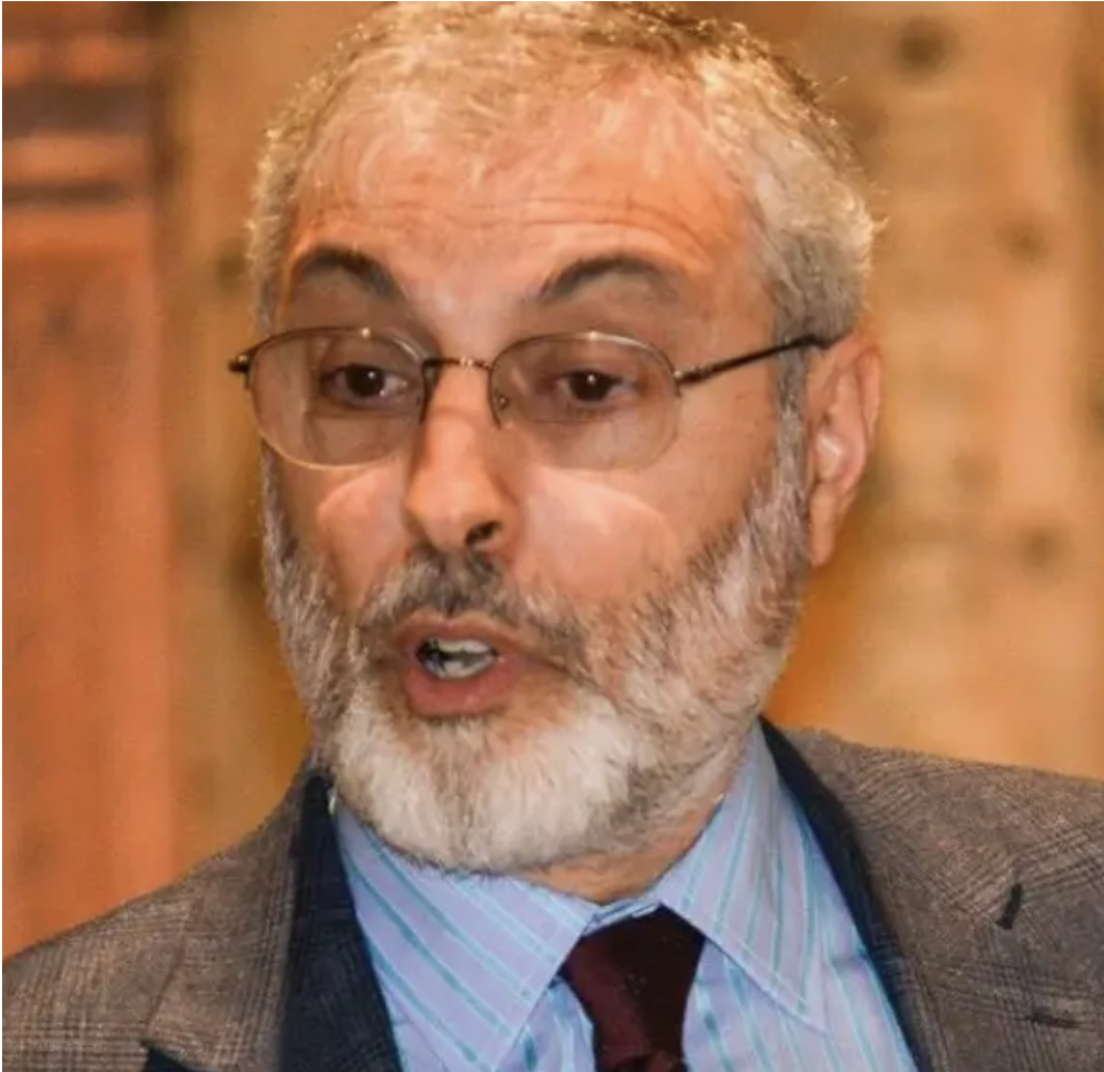

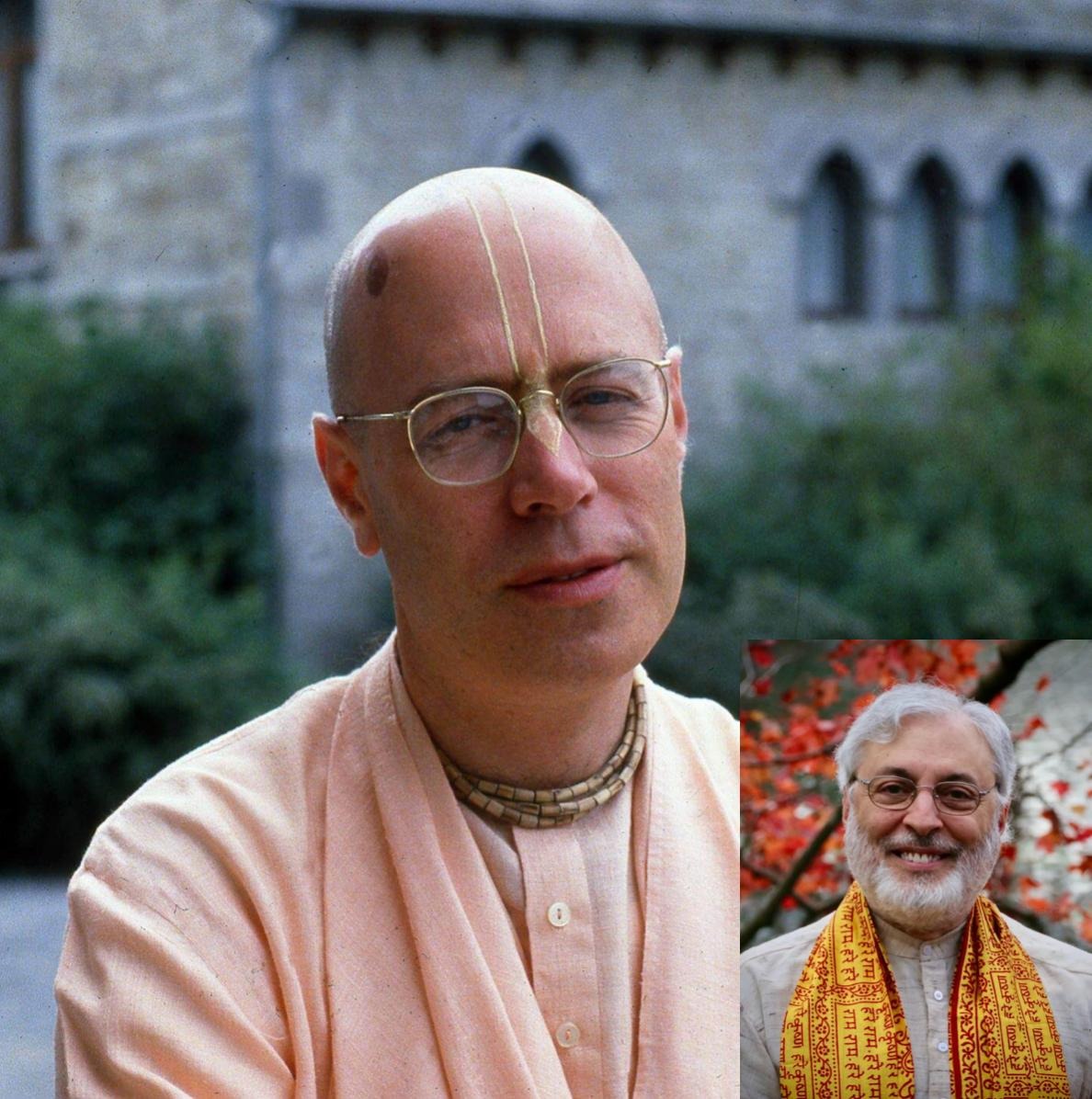
In March 2002, Tamal Krishna Goswami died in a car accident in Mayapur, India. He was a Cambridge doctoral candidate. His dissertation – five chapters on Prabhupada’s theological contributions – was unfinished. No conclusion. No title. No final chapter on prema, the ultimate goal of devotional life.
Ten years later, Oxford University Press published A Living Theology of Krishna Bhakti: Essential Teachings of A. C. Bhaktivedanta Swami Prabhupada.
The cover says Tamal Krishna Goswami. The editor is Graham M. Schweig – known within ISKCON as Garuda Das – a professor of philosophy and religion at Christopher Newport University in Virginia.
But here’s what the introduction reveals, if you read carefully:
- Tamal never gave the book a title. Schweig created it (p.19).
- Tamal never wrote the concluding chapter. Schweig wrote it – all 30 pages (pp.200-228).
- Tamal never wrote the introduction. Schweig wrote that too (pp.1-20).
- Schweig added the section breaks, the chapter titles, and the editorial notes (p.19).
- Schweig worked with Oxford’s copy editor to reshape a dissertation into a book (p.19).
So what we have is a text where roughly 50 pages of a 228-page book were written by someone other than the credited author. The title was chosen by someone else. The structure was reorganized by someone else. The conclusion – the part that tells you what it all means – was written by someone else.
And the credited author is dead. He can’t approve or reject any of it.
If this sounds familiar, it should. It’s the same pattern that plays out with Prabhupada’s own books after 1977: the author departs, and editors step in to “complete” and “improve” the work according to their own vision, publishing it under the original author’s name and authority.
Schweig says: “Goswami’s words and ideas have been preserved with the utmost care, and any editing was executed only to bring out more clearly what the author was putting forth” (p.19).
The editors of the revised Bhagavad-gita said the same thing.
The Pattern: Someone Else’s Work, Schweig’s Framework
And Schweig isn’t done. He is now preparing an “annotated edition” of Prabhupada’s Bhagavad-gita As It Is – his own spiritual master’s book – which he frames as a “middle ground” with “new scholarly endorsements.” The pattern is consistent: take someone else’s work, wrap it in your own academic framework, and present the result as the definitive version.
With A Living Theology, the dynamic is layered. Tamal’s thesis was itself an attempt to reframe Prabhupada’s teachings through Western academic categories. Schweig then took Tamal’s reframing and added his own layer on top. The result is Prabhupada filtered through Tamal, filtered through Schweig, filtered through Oxford University Press.
Three degrees of separation from the original.
And at each layer, something changes. The language shifts. The frameworks multiply. The tradition’s own categories – siddhanta, tattva, shabda-pramana – get replaced by Western academic ones. By the time the reader encounters “Prabhupada’s theology,” it’s wearing a suit it never owned.
Let’s look at how this works, chapter by chapter.
The Revised Gita as Default: A Choice That Speaks Volumes
Open the book to page vii. The abbreviations list. Easy to skip.
Don’t skip it.
“BG – Bhagavad-gita As It Is, 1989 ed. unless otherwise noted.”
One line. Buried in a list of abbreviations. But it’s one of the most important sentences in the book.
The 1989 edition is the posthumously revised version – the one Prabhupada never saw, never approved, never read from. The 1972 Macmillan edition is the text he personally used for five years, lectured from, quoted in conversations, and distributed around the world.
Thousands of changes were introduced after his death. Not typo corrections – meaning changes. The kind of changes where “Blessed Lord” becomes “Supreme Personality of Godhead” because an editor “obviously preferred this to the more archaic-sounding alternative” (p.141).
That quote is from the book itself. Tamal documents the change. Notes that Prabhupada used both terms interchangeably. And then the book defaults to the edition that overrode the author’s choice.
Think about that. A book about Prabhupada’s “essential teachings” cites a version of the Gita that an editor revised against the author’s approved wording. And treats this as normal.
In any other field – literature, law, musicology – the author’s final approved text is the definitive text. A posthumous revision published under the original title is flagged, debated, often rejected. Here, it’s the default.
This isn’t a bibliographic footnote. It’s a theological position: the editors know better than the author.
A Scottish Missionary Made Prabhupada Who He Is
Pages 92-102 present what may be the book’s most audacious claim.
W. S. Urquhart was a Scottish Christian missionary. He was principal of Scottish Churches’ College in Calcutta, where Prabhupada studied in the 1920s. He taught “fulfillment theology” – a Christian missionary strategy that frames Christianity as the completion and perfection of all other religions.
The book’s claim:
“Prabhupada co-opted the spirit of his Scottish professor’s method.” (p.102)
“Urquhart’s theme of personalism became the cornerstone of Prabhupada’s mission.” (p.102)
Read that again. The cornerstone of Prabhupada’s mission came from a Scottish missionary.
Not from Krishna. Not from the Bhagavatam. Not from Chaitanya Mahaprabhu. Not from the Six Gosvamis. Not from Bhaktivinoda Thakura. Not from Bhaktisiddhanta Sarasvati, who personally initiated Prabhupada and gave him the order to preach in the West.
From a Scottish professor at a colonial college.
This is what happens when Western academics analyze a tradition they don’t belong to. They look for influences they recognize. Urquhart taught personalism in a Christian context. Prabhupada taught personalism in a Vaishnava context. Therefore – the academic mind concludes – one must have caused the other.
But Prabhupada’s personalism isn’t Christian theism with Sanskrit vocabulary. It’s Krishna-tattva – a specific ontological claim about a specific Person with specific attributes, specific pastimes, and specific relationships, elaborated across thousands of years by acharyas in an unbroken chain of disciplic succession.
The paribhasa-sutra of the Bhagavatam – krsnas tu bhagavan svayam (SB 1.3.28) – was identified by Jiva Gosvami in the 16th century. Prabhupada’s personalism rests on Jiva’s Sandarbhas, Baladeva’s Govinda-bhasya, Vishvanatha’s commentaries, Bhaktivinoda’s revival. A 500-year theological tradition doesn’t need a Scottish professor to provide its “cornerstone.”
Prabhupada himself was explicit: “Whatever I have, I received from my Guru Maharaja.” He said this hundreds of times. But the book prefers the narrative where a colonial educator shaped an Indian saint’s mission. It’s a better story for Cambridge.
Krishna as Metaphor: The Most Dangerous Idea in the Book
Page 25. The book introduces what it considers its central discovery:
“It is my contention that all three categories of investigation… have failed to identify, much less explain, the presence of a powerful interpretative device – a mahavakya, or ‘great utterance’ – that pervades and governs Prabhupada’s thought.”
The mahavakya is: “Krishna, the Supreme Personality of Godhead.”
The book calls this Prabhupada’s “root metaphor.” The term comes from philosopher Stephen C. Pepper’s World Hypotheses (1942) – a work about how metaphors organize worldviews.
And that’s where the trouble starts.
In Gaudiya Vaishnavism, “Krishna is the Supreme Personality of Godhead” is not a metaphor. Not a root metaphor. Not a metaphorical organizing principle. It is tattva – literal ontological truth. The fundamental reality that everything else in the canon describes and elaborates.
Jiva Gosvami spent six volumes – the Sandarbhas – establishing the evidence for this statement’s literal truth. Prabhupada’s entire project was to present this truth “as it is” – the subtitle of his Gita. “We are not interpreting,” he said. “We are presenting as it is.”
To call it a “metaphor” – even a very important metaphor – introduces a category the tradition explicitly rejects. Metaphors, by definition, are not literally true in the way their surface meaning suggests. They point beyond themselves. But krsnas tu bhagavan svayam doesn’t point beyond itself. It is itself. Krishna is the Supreme Personality of Godhead. Not metaphorically. Not as a “root metaphor that organizes thought.” Actually.
The book tries to soften this: the mahavakya “ontologically refers with full cognitive value to Krishna” (p.149). Fine. But by framing the entire discussion through Soskice’s metaphor theory, Ricoeur’s hermeneutics, and Geertz’s anthropological models, the book places Prabhupada’s central truth-claim inside a framework that treats all religious language as, at best, metaphorically true.
The book even asks the right question and then ignores its own answer: “Would it not be better to look to theories within the Indic traditions?” (p.148). Yes. It would. But then it wouldn’t be a Cambridge dissertation.
The “Creative Innovator” Who Said He Wasn’t One
Throughout the book, Prabhupada is described in language he would have rejected:
“Prabhupada makes his mark, but through creativity in the area of preservation and transmission.” (p.157)
“His genius is in appropriation, a creative retaining and reshaping.” (p.157)
The introduction calls this “gentle and creative innovation” and praises his “balance between too much and too little innovation” (p.7).
On page 147, the book compares Prabhupada to poets – “the ones who come along from time to time and by redescribing our world, re-create it for us… give us a new set of metaphors.”
Here’s what Prabhupada actually said:
“I am not a creator. Whatever Krsna has said, I am just presenting. That’s all.”
“We don’t manufacture anything. We simply present what Krishna says.”
In the Gaudiya tradition, the acharya does not innovate. The acharya transmits. Evam parampara-praptam – “This supreme science was thus received through the chain of disciplic succession” (BG 4.2).
The book’s own source, Julius Lipner, makes this clear: “Theological originality, expressly claimed as such, lacked authority” (p.31).
So the book acknowledges the principle – that innovation has no authority in the tradition – and then spends 200 pages calling Prabhupada an innovator. This isn’t carelessness. It’s a deliberate reframing. If Prabhupada is an “innovator,” then his successors can innovate too. If he’s a “creative theologian,” then future creative theologians – like, say, the author of this very book – have precedent for their own creative revisions.
You see where this leads.
“Shed Your Rigidities”
Page 8. The introduction quotes scholar Rachel Fell McDermott:
“Rachel Fell McDermott… describes her amazement at observing Tamal want ‘ISKCON devotees to shed some of their theological and practical rigidities in light of deeper study of the Hindu tradition and other world religions.’”
What McDermott calls “theological rigidities,” Prabhupada called siddhanta. Established conclusions. The non-negotiable foundations of the tradition:
- Krishna is the Supreme Person. Not one god among many.
- The soul is eternally distinct from God. Not identical.
- Bhakti is the supreme path. Not one option among equals.
- Scripture is the supreme authority. Not one voice in a dialogue.
Prabhupada didn’t present these as “rigidities” to be shed. He presented them as eternal truths revealed by Krishna Himself. To call them “rigidities” that need to be loosened through “deeper study of… other world religions” is to suggest that five thousand years of Vedic revelation should defer to the comparative religion department.
And this is the stated agenda of the book: to soften ISKCON’s “rigidities” through academic engagement. The academic establishment offers to help ISKCON become more “flexible.” More “nuanced.” More acceptable to the academy.
The price of admission is your siddhanta.
The Debt That Doesn’t Exist
Page 208. Schweig’s conclusion includes this:
“Perhaps its tradition owes a debt to Christian development of theology and the Western study of religion, as they have assisted modern Vaishnava theologians in the further illumination of their faith.”
Gaudiya Vaishnavism owes a debt to Christianity.
The tradition that produced the Sandarbhas of Jiva Gosvami. The Govinda-bhasya of Baladeva Vidyabhusana. The complete theological system of sambandha, abhidheya, and prayojana. An epistemology, an ontology, a soteriology, and an aesthetic theory of rasa that has no parallel in Western thought.
This tradition – fully developed centuries before any Western encounter – “owes a debt” to Christian theology?
This is the colonial mentality dressed in academic robes. The assumption that non-Western traditions need Western frameworks to understand themselves. That the sophisticated philosophical tradition of the Gosvamis was somehow incomplete until Cambridge showed up to help.
Prabhupada encountered this attitude in the 1920s from the British. He encountered it again in the 1960s from American academics. And here it is in 2012, in a book published by Oxford University Press, presented as scholarship.
The Invisible Acharyas
Open the book’s bibliography. Count the references.
Western scholars cited extensively: Soskice, Ricoeur, Geertz, Pepper, McFague, Barbour, Hatcher, Waldman, Clooney, Lipner, Hopkins, Brooks, Haberman, Knott, Bromley.
Now look for the acharyas – the actual authorities in Prabhupada’s own line.
Vishvanatha Chakravarti Thakura? Barely mentioned.
Baladeva Vidyabhusana? A footnote.
Bhaktivinoda Thakura? Referenced but not deeply engaged.
Bhaktisiddhanta Sarasvati? Cited for biographical facts, but his theological contributions – the ones Prabhupada directly inherited – are not analyzed.
A book about Prabhupada’s “essential teachings” relies more on Janet Soskice and Clifford Geertz than on the acharyas Prabhupada himself studied, quoted, and followed.
This is not an oversight. It’s a methodological choice. And the methodology reveals the agenda: present Prabhupada through frameworks the academy recognizes, not through the tradition he belongs to.
ISKCON as “Sect” – The Quiet Downgrade
Page 3 describes ISKCON as “a branch or sect of Vaishnavism.”
Prabhupada would have corrected this immediately.
He didn’t present ISKCON as a sect. He presented it as the continuation of Chaitanya Mahaprabhu’s sankirtana mission – the yuga-dharma for the present age, predicted in the Bhagavatam itself. Not one branch among many. The fulfillment of a divine prophecy:
“In every town and village, My holy name will be preached.” (CB Antya 4:126)
Prabhupada rejected the label “Hindu.” He rejected “sect.” He said: “Krishna consciousness is not a sectarian religion. It is the eternal function of the soul.”
Calling ISKCON “a sect” makes it one option among many. That’s how the academy sees it. That’s not how the tradition sees itself. And a book claiming to represent the tradition should know the difference.
The same page also invokes Romila Thapar’s “syndicated Hinduism” (p.98) – a deconstructive concept designed to critique political Hinduism. Comparing ISKCON to political Hinduism is not scholarship. It’s a category error that serves to make the tradition look constructed rather than revealed.
The Word “Theology” and What It Smuggles In
Pages 205-208 spend considerable energy justifying the use of “theology” for Gaudiya Vaishnava thought.
The book acknowledges the problem: “Vaishnava thought is considered philosophy and not theology” within ISKCON (p.206). And it admits that “’theology’ would be unattractive to practitioners of Indian religion because it has been seen as the exclusive domain of Christian thought” (p.206).
Then it uses the word anyway. Everywhere. In the title. In every chapter heading. In the framing of every argument.
This matters because “theology” isn’t just a word. It’s a Western epistemological framework. Theologia – discourse about God – is a discipline where human reason interrogates divine revelation. Fides quaerens intellectum. Faith seeking understanding. Reason leads. Revelation follows.
Gaudiya Vaishnavism works the other way. Shabda-pramana – transcendental sound authority – leads. Reason serves. The traditional terms reflect this: siddhanta (established conclusion), tattva (truth, reality), darshana (vision, revelation). These aren’t different words for the same thing. They encode a fundamentally different relationship between reason and revelation.
Importing “theology” imports, with the word, the assumption that Prabhupada’s teachings can be evaluated by academic standards external to the tradition. Once that assumption is in place, the academy becomes the judge of siddhanta. And the tradition loses its own voice.
What the Book Gets Right
This isn’t all bad. Credit where it’s earned.
The identification of krsnas tu bhagavan svayam as Prabhupada’s governing mahavakya is genuinely brilliant (pp.25-26). Even though the “root metaphor” framing is wrong, the observation itself is right: this phrase is the lens through which Prabhupada reads every text.
The quantitative data is valuable: “Krishna, the (Supreme) Personality of Godhead appears no less than 7,926 times” in Prabhupada’s works (p.25). Nobody had counted before.
The analysis of how Prabhupada balances Krishna’s sweetness and majesty – intimate Vrindavan pastimes alongside cosmic sovereignty – through the mahavakya is theologically sound (pp.152-153).
Schweig’s chapter on prema (pp.200-218), despite the questions about its authorship, is the most theologically grounded section. It stays closer to the tradition’s own categories – sneha, mana, pranaya, raga, anuraga, bhava, mahabhava – rather than importing Western frameworks. The three-text framework (Gita = sambandha, Bhagavatam = abhidheya, Chaitanya Charitamrita = prayojana) accurately reflects the tradition’s understanding.
If the entire book had been written with this chapter’s respect for the tradition’s own voice, it would be a different book.
The Pattern
Zoom out one more time.
The 15 problems identified in this analysis aren’t random. They form a coherent pattern:
Reframe authority. Move it from parampara and shabda to Western academic methodology. Cite Soskice instead of Vishvanatha. Quote Geertz instead of Jiva Gosvami. Make the academy the judge.
Relativize truth-claims. Turn ontological statements into metaphors. Turn siddhanta into “theological creativity.” Turn a revealed tradition into “a sect.” Turn a divine mission into “syndicated Hinduism.”
Import Christian categories. Fulfillment theology. “Theology” itself. A “debt to Christianity.” The assumption that Western frameworks are needed to understand an Eastern tradition.
Legitimize textual changes. Default to the revised Gita. Treat Prabhupada’s approved language as “archaic.” Normalize the idea that editors can improve an author’s work after his death.
Open the door. “Shed rigidities.” Complete an incomplete thesis with your own conclusion. Establish the precedent that academic successors can develop, revise, and redirect a tradition’s self-understanding.
The net effect: Prabhupada goes from being a shaktyavesha-avatara transmitting eternal knowledge to a “creative theologian” whose contributions can be evaluated, improved, and superseded by the academy.
The book doesn’t attack Prabhupada. It doesn’t mock the tradition. It does something more subtle: it translates the tradition into a language that strips it of its authority. After reading it, a university student would understand Prabhupada as an interesting religious innovator. What they would not understand is that he claimed to transmit – not create – eternal truth, and that the tradition considers this claim literally, not metaphorically, true.
That distinction – between transmission and creation, between tattva and metaphor, between shabda and theology – is everything. And the book erases it.
The Last Word
On page 24, the book quotes Prabhupada:
“Whatever I have wanted to say, I have said in my books. If I live, I will say something more. If you want to know me, read my books.”
The irony is almost unbearable.
A book that claims to explain Prabhupada’s essential teachings cites a version of the Gita he never approved, filters his philosophy through frameworks he never used, attributes his personalism to a source he never acknowledged, calls his central truth-claim a metaphor, and frames his life’s work as “creative innovation” in a tradition that explicitly forbids innovation.
And then quotes him saying: read my books.
Not read books about my books. Not read what academics think my books mean. Not read what my secretary’s editor thinks I would have concluded if I’d lived to finish his dissertation.
Read my books.
That’s the living theology. Not this one.
Sources
- A Living Theology of Krishna Bhakti (Oxford UP, 2012) – direct page citations throughout
- Prabhupada’s lectures, letters, and books